


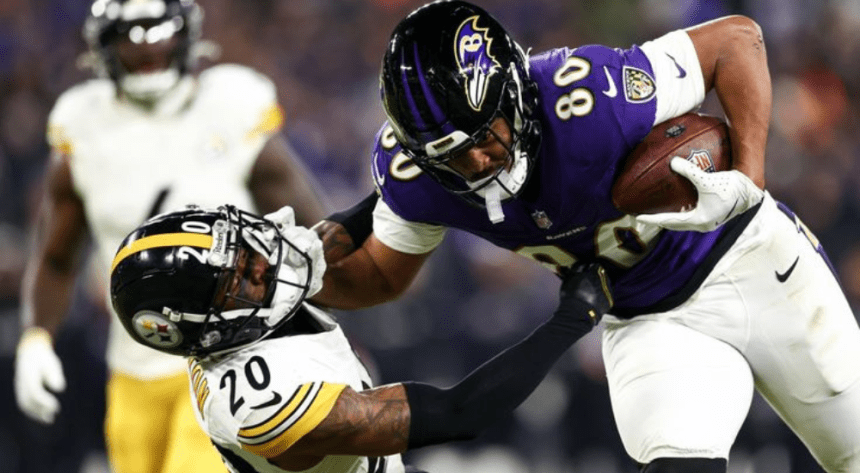
Twice in a single season, the Baltimore Ravens and Buffalo Bills took the field against each other — and twice they produced games that will be discussed for decades. A playoff thriller on a snow-covered January evening ended 27-25 when Mark Andrews dropped a game-tying two-point conversion with 1:33 remaining. An unforgettable Week 1 shootout in September finished 41-40 after Josh Allen led Buffalo back from a 15-point fourth-quarter deficit, becoming the first team in NFL history to score 40-plus points and lose after allowing 235+ rushing yards.
The player statistics from these two matchups tell a layered story of individual brilliance, catastrophic mistakes, and the razor-thin margins separating playoff advancement from devastating disappointment. Josh Allen’s dual-threat dominance across both games. Derrick Henry’s record-breaking rushing performances undermined by critical turnovers. Lamar Jackson’s electric playmaking ability haunted by untimely fumbles at the worst possible moments.
What follows is the complete statistical breakdown of both games — built on verified data from every authoritative source and written entirely in original language.
GAME 1 — Divisional Playoff: Bills 27, Ravens 25
January 19, 2025 | Highmark Stadium, Orchard Park, New York Attendance: 70,745 | Conditions: Snow-covered field
Team Statistics
| Category | Ravens (BAL) | Bills (BUF) |
|---|---|---|
| Final Score | 25 | 27 |
| Score by Quarter | 7 – 10 – 2 – 6 | 14 – 0 – 7 – 6 |
| Total Yards | 416 | 273 |
| Rushing Yards | 176 | 133 |
| Passing Yards | 254 (Jackson) | 127 (Allen) |
| Turnovers | 3 | 0 |
| Third Downs | 7/10 | 6/13 |
| Time of Possession | 31:28 | 28:32 |
| 2-PT Conversions | 0/2 | — |
| Result | Lost in Divisional Round | Advanced to AFC Championship |
Baltimore outgained Buffalo by 143 total yards. The Ravens converted 70% of their third downs compared to Buffalo’s 46%. Time of possession favored the visitors. Yet the Bills won by two points because Baltimore turned the ball over three times while Buffalo committed zero — the oldest formula in football executed to perfection.
Josh Allen: Turnover-Free Efficiency
Josh Allen entered the divisional playoff against Baltimore facing considerable pressure. The Bills had lost three consecutive playoff games at this stage across previous seasons — all heartbreaking one-score defeats that raised questions about their ability to break through. His response was a quarterback master class built on ball security and clutch rushing production.
Official Statistics
- Passing: 16 of 22 — 72.7% — 127 yards — 0 touchdowns — 0 interceptions
- Rushing: 7 carries — 20 yards — 2 touchdowns (1-yard, 4-yard runs)
- Passer Rating: 90.7
- Turnover-Free Games: 11th of the season
His passing numbers were modest by his own standards — 127 yards represented his fewest in a playoff game since becoming Buffalo’s starter. The Bills intentionally limited their passing volume, relying on a ground game that James Cook and Ray Davis carried effectively to control the clock and protect possessions.
Both of Allen’s touchdown runs came in the first half. His 1-yard score gave Buffalo a 14-7 lead following Lamar Jackson’s fumble on a botched snap — a sequence that perfectly illustrated how the game would be decided. His 4-yard score early in the second quarter established a 14-0 advantage before Baltimore’s offense found any rhythm.
“What a complete win,” Allen said afterward. “Throughout the season, people have doubted us—saying we lack talent, we’re undersized, we can’t stop the run, and that we aren’t capable of competing.”
His 11th turnover-free game of the season came in the playoff moment that mattered most. While Jackson committed two turnovers and Andrews added another, Allen protected the football with the discipline of a quarterback who has learned from painful playoff defeats what championship teams require.
Derrick Henry: Dominance Without the Win
Derrick Henry’s divisional playoff performance captured everything frustrating about the Ravens’ 2025 season — extraordinary individual production undermined by team mistakes at decisive moments.
Full Statistical Line
- Rushing: 16 carries — 84 yards — 5.3 yards per carry — 1 touchdown (5-yard run in Q3)
- Impact: 68 rushing yards on a single third-quarter drive
- Season Context: Followed his Week 4 season-high 199 yards against Buffalo
Henry’s third-quarter touchdown drive was a masterpiece of power running. Baltimore traveled 80 yards in seven plays, with 68 of those yards coming on the ground. Henry’s combination of patience behind his blockers and explosive acceleration through gaps produced multiple chunk plays that wore down Buffalo’s defense and cut the Bills’ lead to 21-19 after a failed two-point conversion.
His 84 rushing yards were considerably below his Week 4 total of 199 against these same Bills — a reflection of Buffalo’s defensive adjustments and the game script that forced Baltimore to throw more frequently while trailing. Still, his 5.3 yards-per-carry average showed consistent effectiveness throughout the afternoon.
The contrast between Henry’s contributions and the final result demonstrates the fundamental problem Baltimore faced all season: elite individual performances cannot overcome collective mistakes at critical junctures.
Mark Andrews: The Fumble and the Drop
No individual player bore more responsibility for Baltimore’s playoff elimination than tight end Mark Andrews, whose fourth-quarter fumble and dropped two-point conversion will define the most painful moments of the Ravens’ 2025 campaign.
The Sequence That Ended Baltimore’s Season
Midway through the fourth quarter with the Ravens trailing 24-19, Andrews caught a 16-yard pass for a first down and appeared positioned to gain additional yardage. Linebacker Terrel Bernard punched the ball out cleanly, recovering the fumble and ending what had been Baltimore’s most promising drive of the second half.
It was only Andrews’ second career lost fumble — and his first since 2019. The timing was catastrophic. Baltimore had driven into Buffalo territory with momentum firmly on their side, needing a touchdown to potentially take their first lead of the game. The fumble gave the Bills possession, leading directly to Tyler Bass’ 21-yard field goal that extended Buffalo’s advantage to 27-19.
“We were motivated all week, man,” Bernard said afterward. “We put a lot of work into it. “Watching this team’s effort finally pay off is amazing—I couldn’t be prouder of them.”
The Drop
With 1:33 remaining and Baltimore trailing 27-25 following Isaiah Likely’s 24-yard touchdown reception, the Ravens needed a two-point conversion to tie. Jackson rolled right and found Andrews completely uncovered in the end zone. The pass hit Andrews directly in the chest. He dropped it.
The ball bounced off his body and fell incomplete. Buffalo’s sideline erupted. Baltimore’s season was functionally over. Andrews did not make himself available to media afterward — a decision his teammates supported publicly while privately acknowledging the devastating impact of both mistakes.
Jackson dropped to 1-5 in playoff games when committing a turnover. Andrews’ fumble counted as one of Baltimore’s three giveaways. His drop prevented the tie that would have given the Ravens overtime possession and a realistic chance to advance.
Lamar Jackson: Two First-Half Turnovers
Lamar Jackson produced impressive overall numbers in the divisional playoff — 18 of 25 passing for 254 yards with two touchdowns — but his two first-half turnovers created the deficit Baltimore spent the entire second half attempting to overcome.
Official Statistics
- Passing: 18 of 25 — 72.0% — 254 yards — 2 touchdowns — 1 interception
- Rushing: 54 yards on scrambles and designed runs
- Turnovers: 1 fumble, 1 interception (both in first half)
- Playoff Record with Turnover: 1-5
His first turnover came on Baltimore’s second possession after a miscommunication with wide receiver Rashod Bateman led to an interception. The second arrived on a botched snap that Jackson initially secured before attempting to scramble — only to have safety Damar Hamlin grab his ankle and force the fumble. Von Miller scooped it up and returned it to Baltimore’s 24-yard line, setting up Allen’s second rushing touchdown.
Both turnovers directly led to Buffalo touchdowns. Remove them and the first-half score reads dramatically different. Keep them and the Ravens entered halftime trailing 14-7, needing a complete second-half turnaround just to give themselves a chance.
His 16-yard touchdown pass to Rashod Bateman on Baltimore’s opening drive gave the Ravens a 7-0 lead and suggested the offense would operate efficiently all afternoon. His 24-yard strike to Isaiah Likely with 1:33 remaining made the score 27-25 and set up the failed two-point conversion. Between those two moments, Jackson’s individual mistakes created holes too deep for even his considerable talents to fully escape.
“It was uncharacteristic to have turnovers like that,” coach John Harbaugh acknowledged. “There were opportunities for us to not have those, but we had them.”
James Cook: Ground Game Control
Running back James Cook provided the ground production that allowed Buffalo to control possession and limit Baltimore’s offensive opportunities throughout the game.
Cook’s rushing totals exceeded 70 yards on steady, patient running behind Buffalo’s offensive line. His ability to convert short-yardage situations and maintain drives gave the Bills the sustained possessions necessary to keep Jackson and Henry off the field.
Rookie Ray Davis contributed a 1-yard rushing touchdown — his first playoff score — that demonstrated Buffalo’s commitment to establishing multiple rushing threats rather than relying exclusively on Allen’s arm.
The Defense That Won the Game
Buffalo’s defense entered the divisional playoff with considerable skepticism surrounding its ability to contain Henry and Baltimore’s rushing attack. The Ravens had gashed them for 271 rushing yards and 35 points in a Week 4 blowout, raising legitimate questions about whether the Bills’ defensive front could stand up to physical playoff football.
They answered by holding Henry to 84 yards, forcing three turnovers, and making critical stops on Baltimore’s failed two-point conversion attempts. Linebacker Matt Milano batted down Jackson’s two-point throw after Henry’s touchdown. Terrel Bernard forced Andrews’ fumble. Damar Hamlin stripped the ball from Jackson’s ankle on the botched snap.
Buffalo allowed 416 total yards — a number that would concern most coordinators. But they forced three turnovers and committed none, winning the most important statistical category in playoff football.
GAME 2 — Week 1 Regular Season: Bills 41, Ravens 40
September 7, 2025 | Highmark Stadium, Orchard Park, New York Attendance: 70,745 | SNF Season Opener
Team Statistics
| Category | Ravens (BAL) | Bills (BUF) |
|---|---|---|
| Final Score | 40 | 41 |
| Score by Quarter | 3 – 17 – 14 – 6 | 7 – 6 – 6 – 22 |
| Total Yards | 447 | 497 |
| Rushing Yards | 236 | 125 |
| Passing Yards | 209 (Jackson) | 394 (Allen) |
| Turnovers | 1 (Henry fumble) | 0 |
| Fourth-Quarter Points | 6 | 22 |
| Largest Lead | 40-25 | — |
| Historic Milestone | First team to lose scoring 40+ and rushing 235+ | Epic 15-point comeback in final 4 minutes |
Baltimore became the first team in NFL history to score 40 or more points while rushing for 235 or more yards and lose the game. Buffalo overcame a 15-point fourth-quarter deficit for only the third time in franchise history. The final score of 41-40 was the first such result in NFL history. All three statistics perfectly capture the surreal nature of what unfolded under the Sunday Night Football lights.
Josh Allen: Historic Dual-Threat Performance
Josh Allen’s Week 1 performance against Baltimore ranks among the finest individual quarterback efforts of the entire 2025 NFL season — a 394-yard passing masterpiece combined with two rushing touchdowns that erased a 15-point deficit in four minutes.
Complete Box Score
- Passing: 33 of 46 — 71.7% — 394 yards — 2 touchdowns — 0 interceptions
- Rushing: 9 carries — 30 yards — 2 touchdowns
- Passer Rating: 112.0
- Historic Achievement: 7th career game with multiple passing and rushing TDs — most in NFL history
Allen’s fourth-quarter brilliance turned what appeared to be a Baltimore blowout into one of the most remarkable comebacks in Bills history. Trailing 40-25 with less than four minutes remaining, he threw two touchdown passes and ran for another — accounting for all 16 points Buffalo scored in the final 3:06 to force overtime possibilities.
His 66th career rushing touchdown — scored during the comeback — moved him past Hall of Fame running back Thurman Thomas for the Bills’ franchise record. The milestone arrived in a moment that demanded complete focus and execution rather than celebration, perfectly capturing Allen’s competitive mentality.
“Our team didn’t quit,” Allen said in his postgame interview. “I think there’s people that left the stadium. That’s OK, we’ll be fine but have some faith next time.”
His message to the fans who departed early was delivered with a smile — but contained a serious point about belief in moments when defeat appears inevitable. Buffalo trailed by 15 points with the clock running toward zero. Allen simply refused to accept that reality.
The Fourth-Quarter Sequence
Allen’s first touchdown pass of the final frame went to Keon Coleman on a tipped ball in the end zone — a play that required both accuracy under pressure and Coleman’s athletic ability to adjust mid-route. His second scoring throw came on a precise sideline connection that moved Buffalo within striking distance.
Between those throws, Allen ran for a touchdown that demonstrated his unique dual-threat capabilities. Rather than forcing passes into coverage against a defense expecting desperation throws, he recognized open rushing lanes and attacked them with the decisiveness of a running back reading blocks.
His 394 passing yards were the highest single-game total of the early 2025 season through Week 1. His four total touchdowns tied him with several other elite quarterbacks for the most scoring responsibility in season-opening games. His zero-turnover performance against a defense that generated constant pressure showed the ball security that defines MVP-caliber quarterback play.
Derrick Henry: Record-Breaking Performance, Devastating Fumble
Derrick Henry’s Week 1 performance was simultaneously one of the finest individual rushing efforts of his Hall of Fame career and one of the most painful given how it ended.
Full Statistical Line
- Rushing: 18 carries — 169 yards — 9.4 yards per carry — 2 touchdowns
- Receiving: 1 reception — 13 yards
- Historic Achievement: 13th career game with 150+ yards and 2+ TDs (tied Jim Brown’s all-time record)
- All-Time Milestone: Passed Jim Brown for 6th on career rushing TD list (108 total)
Henry’s first-half production bordered on the unfathomable. Nine carries for 123 yards and one touchdown before halftime — an average of 13.7 yards per attempt that reflected complete dominance over Buffalo’s defensive front. His 46-yard touchdown run in the third quarter showed the rare combination of size, speed, and acceleration that makes him one of the most physically imposing running backs in league history.
By the time the fourth quarter arrived, Henry had already cemented a performance that would appear on season-ending highlight reels regardless of the final score. He had tied Jim Brown for the most games with 150+ rushing yards and 2+ touchdowns. He had surpassed Brown on the all-time rushing touchdown list. He was on pace to become the first running back in 2025 to eclipse 200 rushing yards in a single game.
Then, with 3:06 remaining and Baltimore clinging to a 40-32 lead, he fumbled.
Defensive tackle Ed Oliver stripped the ball cleanly. Linebacker Terrel Bernard recovered at Baltimore’s 30-yard line. Allen capitalized immediately, scoring to bring Buffalo within two points before converting the two-point try. Matt Prater’s 32-yard field goal as time expired completed the comeback.
“I told my teammates after the game, put the loss on me. I own it like a man,” Henry said. “Got lackadaisical and they made a play. If I take care of the ball, I feel like it would be a different situation.”
His accountability was immediate and complete. The fumble was his responsibility. The loss would belong to him regardless of his 169 yards and two scores. That mentality — accepting blame rather than deflecting it — defines elite competitors even in their most painful moments.
Lamar Jackson: Near-Perfect Efficiency
Lamar Jackson’s Week 1 performance was everything Baltimore’s offense needed — three total touchdowns, a 144.4 passer rating, efficient decision-making, and explosive playmaking ability that kept the Ravens ahead through three quarters.
Official Statistics
- Passing: 21 of 34 — 61.8% — 209 yards — 2 touchdowns — 0 interceptions
- Rushing: 70 yards — 1 touchdown (13-yard scramble in Q2)
- Passer Rating: 144.4
- Total Touchdowns: 3
His 13-yard rushing touchdown gave Baltimore a 10-7 lead in the second quarter — a go-ahead score where Jackson lowered his shoulder into defenders and fought for yardage rather than sliding or stepping out of bounds. The play exemplified the physical style that makes him so difficult to defend, combining elite speed with a running back’s mentality in contact situations.
His two passing touchdowns showed precision and creativity. A connection with Zay Flowers demonstrated timing and trust built through repetition. A throw to DeAndre Hopkins — who made a spectacular one-handed catch in the end zone for a 29-yard score — highlighted Jackson’s willingness to attack downfield and give elite receivers opportunities to make contested plays.
Baltimore’s offense scored 40 points and generated 447 total yards under Jackson’s leadership. In most games, those numbers produce comfortable victories. Against Josh Allen’s fourth-quarter brilliance and Henry’s late fumble, they produced the most painful kind of defeat.
“You just got to finish the game,” Jackson said. “It’s not over until there is zero, zero, zero on the clock. And we found that out tonight.”
Zay Flowers: Career-Best Performance
Wide receiver Zay Flowers produced the finest individual receiving game of his professional career in Week 1, providing Jackson with a reliable target throughout the afternoon.
Full Statistical Line
- Receptions: 7
- Receiving Yards: 143 (career-high)
- Touchdowns: 1
- Target Share: 47.4% (9 of 19 team targets)
His 143 receiving yards represented a personal best across his first two NFL seasons. His 47.4% target share — receiving nearly half of Jackson’s total throws — reflected the offensive game plan’s emphasis on getting the ball to Baltimore’s most dynamic playmaker in space.
Flowers’ ability to create separation after the catch and turn short completions into significant gains gave Jackson confidence to target him repeatedly in high-leverage situations. His touchdown provided a critical score during Baltimore’s second-half surge.
Matt Prater: Walk-Off Hero at Age 41
Three days before the season opener, 41-year-old kicker Matt Prater signed with Buffalo’s practice squad after Tyler Bass landed on injured reserve with hip and groin issues. Four days later, Prater became the oldest kicker to deliver a game-winning field goal as time expired in a regular-season opener.
His 32-yard kick — struck with perfect technique and no hesitation despite the pressure — sailed through the uprights as the final seconds expired, completing Buffalo’s 15-point comeback and giving Allen the victory his fourth-quarter heroics deserved.
“The biggest thing I saw when we got down early, no one blinked,” Prater said. “Our team didn’t quit.”
Prater also converted a critical 43-yard field goal on the final play of the second quarter, answering Baltimore’s go-ahead touchdown and preventing the Ravens from carrying momentum into halftime. His calm under pressure — developed across 18 NFL seasons — was exactly what a young team attempting a historic comeback required.
What Both Games Reveal
The Turnover Differential Decides Everything
Across both matchups, Buffalo committed zero turnovers while Baltimore gave the ball away four times (three in the playoff game, one in Week 1). Those four turnovers directly produced 21 Buffalo points in the playoff game and the game-winning field goal opportunity in Week 1.
Ball security is the oldest cliché in football coaching. These two games provided fresh evidence for why that cliché endures.
Josh Allen Owns Baltimore
Allen finished the 2025 season 2-0 against the Ravens with 521 combined passing yards, four passing touchdowns, zero interceptions, and four rushing scores across both games. His dual-threat ability created problems Baltimore’s defense never solved — pocket pressure forced scrambles that turned into chunk plays, coverage discipline broke down against play-action, and goal-line situations favored Allen’s physicality.
His turnover-free performance in the playoff game — his 11th of the season — came in the moment that mattered most. While Jackson committed two giveaways in the first half, Allen protected the football with championship discipline.
Derrick Henry Cannot Do It Alone
Henry rushed for 253 combined yards and three touchdowns across both games — averaging 6.6 yards per carry against a Bills defense that struggled to contain him. He tied Jim Brown’s all-time record for games with 150+ yards and 2+ scores. He passed Brown on the all-time rushing touchdown list.
Baltimore still went 0-2 because Henry’s fumble in Week 1 and the team’s collective turnover issues in the playoff game undermined his individual brilliance. Running back excellence matters enormously in playoff football. It cannot overcome three turnovers and missed two-point conversions by itself.
Mark Andrews’ Two Mistakes Will Define 2025
Andrews’ fourth-quarter fumble and dropped two-point conversion in the divisional playoff were not simply individual errors — they were the specific plays that prevented Baltimore from advancing to the AFC Championship. The fumble eliminated a scoring drive. The drop prevented overtime.
Both mistakes arrived in the most pressure-filled moments of Baltimore’s season. Both will be discussed for years as the defining plays of the Ravens’ 2025 campaign.
Conclusion: Two Classics, One Clear Winner
The Baltimore Ravens vs Buffalo Bills rivalry produced two of the 2025 NFL season’s most memorable games — a playoff thriller decided by a dropped two-point conversion and a regular-season opener featuring the largest fourth-quarter comeback in Bills history.
Josh Allen threw for 521 yards, four touchdowns, and zero interceptions across both games while rushing for four more scores. Derrick Henry gained 253 rushing yards and three touchdowns on 9.1 yards per carry. Lamar Jackson produced three total touchdowns in Week 1 and two more in the playoff game. Mark Andrews’ two critical mistakes ended Baltimore’s season.
The Pro Football Reference box scores record the official statistics. The ESPN game recaps preserve the play-by-play details. The memories of fans who witnessed both contests will remember something more visceral: the specific moments individual brilliance and devastating mistakes combined to produce unforgettable football.