


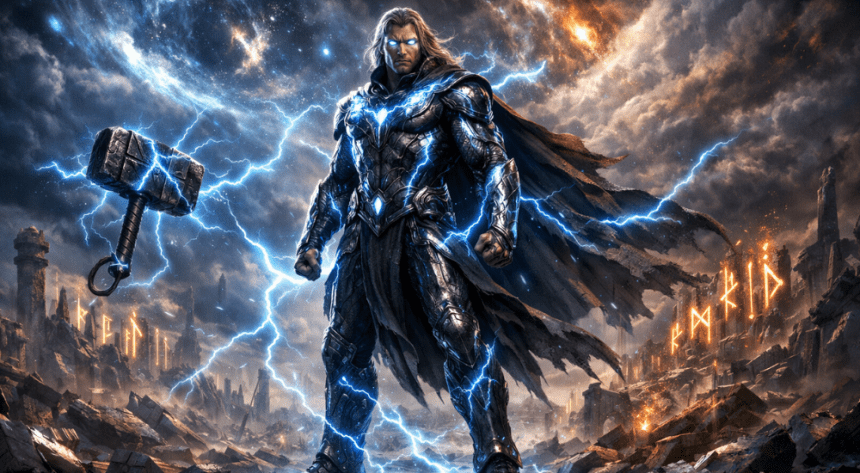
The keyword Thor 2.0: The God of Thunder Reborn in a New Marvel Era captures the thrilling transformation of one of Marvel’s most legendary heroes. Deeply rooted in Norse Myths and Norse Mythology, Thor Odinson—the Son of Odin and a true Norse god—has always embodied thunderous power, unwavering honor, and divine responsibility. In this contemporary chapter, the God of Thunder undergoes his most radical rebirth yet: losing worthiness, forging new paths without Mjolnir, allying as Galactus’ Herald against apocalyptic forces like the Black Winter, facing mortality in Al Ewing’s epic saga, and now awakening as an amnesiac mortal in the ongoing Mortal Thor series. This era infuses the character with vulnerability, cosmic ambition, and profound self-discovery, making him pivotal to the Marvel Universe’s multiversal narrative and the MCU’s evolving stakes.
This evolution spans decades of Marvel Comics excellence. Classics from Walt Simonson introduced groundbreaking Asgardian depth, Matt Fraction added sharp character focus, and Jason Aaron revolutionized the mythos with timeline-spanning tales. Key elements include Gorr the God Butcher, Jane Foster as Lady Thor or Mighty Thor, massive crossovers like War of the Realms and Secret Wars, visions of King Thor, and recent cosmic twists. In the MCU, Chris Hemsworth’s Thor transitions from lighthearted adventures to a more mature, elder statesman role in Avengers: Doomsday and beyond. As of March 2026, Thor’s journey represents renewal, resilience, and reinvention amid chaos.
Thor Reborn: The God of Thunder’s Epic Return in the Modern Era
Thor’s modern rebirth is a triumphant reclamation forged in fire and doubt. After periods of unworthiness that stripped him of Mjolnir, he adapted by creating new hammers and confronting threats across realities. This phase honors Norse Myths while expanding into multiversal and cosmic dimensions within the Marvel Universe. Stunning artwork from talents like Esad Ribic, del Mundo, and Christian Ward vividly portrays his thunderous resurgence, blending raw power with emotional resonance. For a comprehensive dive into this foundational arc, check out Marvel’s full reading order of Jason Aaron’s Thor saga.
From Worthy to Reborn: How Thor Regained His Power and Legacy
The journey from unworthiness to rebirth stands as one of Marvel’s most emotionally charged stories. Doubt and failure once prevented Thor from lifting Mjolnir, forcing deep introspection. Jason Aaron masterfully explored this across eras: the young Viking Thor discovering his destiny, the present-day Avenger grappling with identity, and the future King Thor reflecting on legacy. During this time, Jane Foster courageously assumed the mantle as Lady Thor or Mighty Thor, wielding the hammer while battling personal demons like illness, proving godhood’s accessibility beyond birthright. Thor returned in Thor #1 (2018) with renewed authority, stepping back into his role and brandishing a series of freshly forged hammers that embodied his enduring strength and relentless resolve. This narrative arc, encompassing War of the Realms, reinforced his timeless legacy and remains accessible through Marvel Unlimited, Epic Collections, and Marvel Masterworks.
The New Thor Era: Mythic Shifts After Ragnarok and Beyond
Following cataclysmic events like Ragnarok and Secret Wars, Thor’s storytelling shifted toward profound renewal and expanded mythology. War of the Realms saw him rally the Ten Realms—including allies like The Warriors Three and Balder the Brave—against existential invasion, reshaping Asgard and his role as protector. Contemporary tales merge traditional Asgardian elements with broader cosmic and existential themes, moving Thor beyond mere godhood into universal guardianship. Classic compilations in Omnibus editions, Marvel Premiere Classic, and ongoing Marvel Unlimited access preserve these foundational and evolving chapters.
God of Thunder Reborn: Jason Aaron’s Landmark Run Explained
Jason Aaron’s monumental seven-year run (2012–2019) serves as the cornerstone of Thor’s modern identity. Beginning with Thor: God of Thunder, it introduced the chilling Gorr the God Butcher, a villain questioning divinity across three timelines. The saga progressed through Unworthy Thor, where self-doubt dominated, The Mighty Thor spotlighting Jane Foster’s heroic tenure, and Thor (2018), where the God of Thunder Reborn fully reclaimed his destiny with innovative power. The epic climaxed in War of the Realms, influencing every subsequent Thor story. For the detailed chronology, refer to Marvel’s Jason Aaron Thor guide.
Thor Without Mjolnir: Hammers, Heralds, and New Beginnings
The loss of Mjolnir ignited creative reinvention. Thor adopted Stormbreaker and multiple forged hammers, adapting to his changed circumstances. In Donny Cates’ run, following the Black Winter cataclysm, a diminished Galactus recruited Thor as his Herald—a daring alliance granting cosmic might used on Thor’s own terms. This phase boldly redefined the God of Thunder beyond Asgardian confines.
Thor’s MCU Rebirth: Serious Tone Incoming for Avengers: Doomsday
Post-Thor: Love and Thunder (2022), the MCU recalibrates Thor toward dramatic maturity and introspection. Avengers: Doomsday (December 18, 2026) previews a somber, pressured hero confronting multiversal collapse. Marvel Studios leans into mythic legacy and reflection. View teaser insights here: Marvel’s Avengers: Doomsday Thor footage.
Chris Hemsworth’s Thor: Confirmed Return and Future Plans
Chris Hemsworth affirmed on the Smartless podcast (February 2026) that Thor will appear “a couple more times” beyond Doomsday, with “pretty unique” concepts discussed alongside Kevin Feige—potentially encompassing Avengers: Secret Wars (2027) and a possible Thor 5. Read more: Chris Hemsworth confirms Thor future plans.
Thor in Avengers: Doomsday – Teaser Hints at Dramatic Evolution
Teaser scenes show Thor kneeling in prayer, seeking strength to protect his daughter Love and face overwhelming odds—underscoring his evolution into an elder Avenger with greater agency and wisdom after over 2,000 years.
Beyond Love and Thunder: What a Darker, More Unique Thor Means
The pivot from comedy to darker, mythic tones allows exploration of legacy, sacrifice, and immense responsibility, mirroring comics’ cosmic depth and crafting a more introspective, powerful hero.
Thor 5 Rumors: Mythic Reboot After Doomsday and Secret Wars
Speculation swirls around Thor 5 as a mythic reboot following multiversal events, possibly incorporating Thor Corps concepts or legacy handoffs.
The Black Winter and Beyond: Thor’s Cosmic Threats in Recent Comics
The Black Winter—a universe-consuming horror—forced Thor into unprecedented alliances, expanding his battles to cosmic proportions.
Thor as Galactus’ Herald: The Bold Twist in His Reborn Saga
In Donny Cates’ Thor (2020), Thor strategically became Galactus’ Herald post-Black Winter, harnessing cosmic power independently for a reborn, universe-saving role.
Immortal to Reborn: Al Ewing’s Run Leading to the Next Chapter
Al Ewing’s Immortal Thor (2023–2025) culminated in Thor’s dramatic “death” in issue 25 (July 2025), transitioning to Mortal Thor (relaunched August 2025) with Pasqual Ferry on art. Thor awakens as Sigurd Jarlson—an amnesiac mortal construction worker in New York, hammer present but divinity erased. This grounded status quo confronts classic villains like Cobra and Grey Gargoyle with heightened stakes. Discover the launch: Marvel’s Mortal Thor #1 announcement.
Thor 2026 Update: Multiverse Role, Potential Thor Corps, and Legacy
In March 2026, Thor’s multiversal significance grows, with Thor Corps possibilities in Secret Wars and his legacy spanning comics’ mortal arc and MCU elder status.
Why Thor’s Rebirth Defines Marvel’s New Multiversal Era
Thor’s rebirth—from Jason Aaron’s worthiness quests to Al Ewing’s mortal awakening—embodies Marvel’s theme of renewal. Bridging Asgardian roots, cosmic adventures, and multiversal futures, it defines the franchise’s bold direction.
FAQs About Thor 2.0 – The God of Thunder Reborn in 2026
What does “Thor 2.0” or “Thor Reborn” refer to?
It stems from Jason Aaron’s Thor: God of Thunder Reborn (2018–2019), featuring new hammers and Galactus’ herald role against the Black Winter. In the 2026 MCU, it heralds a serious, elder Chris Hemsworth Thor for Avengers: Doomsday.
Is Chris Hemsworth done with Thor after Avengers: Doomsday?
No—Hemsworth confirmed “a couple more times” post-Doomsday (Dec 18, 2026), likely including Secret Wars and potentially Thor 5.
What’s changing for Thor in the MCU’s new era?
A shift to drama, legacy, and elder wisdom post-Love and Thunder, amid multiversal crises and possible Thor Corps elements.
What key comic runs define Thor’s “reborn” phase?
Jason Aaron (2012–2019): Thor: God of Thunder, Mighty Thor (Jane Foster), God of Thunder Reborn. Recent: Donny Cates’ Thor (2020), Al Ewing’s Immortal Thor (ended 2025), now Mortal Thor (2025–present).
Why is Thor called a “herald” in some stories?
In Donny Cates’ Thor (2020), post-Black Winter, weakened Galactus recruits Thor as herald for mutual survival—power wielded strategically.