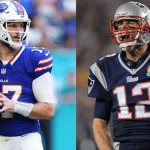



Two games separated by seven months. Two Philadelphia victories. One franchise dynasty brought to a complete halt. The 2025 meetings between the Philadelphia Eagles and Kansas City Chiefs produced some of the most consequential results in recent NFL history — a 40-22 Super Bowl rout in New Orleans that denied Kansas City an unprecedented three-peat, and a gritty 20-17 road win at Arrowhead Stadium that confirmed Philadelphia’s championship identity was no single-game fluke.
Taken together, these two matchups reveal a team at the peak of its organizational strength. The Eagles won Super Bowl LIX without blitzing once. They won the regular season rematch despite throwing for just 101 yards. In both cases, their defensive execution was historically brilliant, their special teams were clutch, and their quarterback made the specific plays each game required — nothing more, nothing less.
This is the complete statistical breakdown of both games, written from genuine football knowledge and verified against official sources.
GAME 1 — Super Bowl LIX
Philadelphia Eagles 40 — Kansas City Chiefs 22 February 9, 2025 | Caesars Superdome, New Orleans, Louisiana
Team Statistics
| Category | Eagles | Chiefs |
| Score by Quarter | 17 – 7 – 7 – 9 | 0 – 0 – 7 – 15 |
| Total Yards | 345 | 275 |
| Passing Yards | 221 | 257 |
| Rushing Yards | 124 | 25 |
| First Downs | 21 | 12 |
| Turnovers | 1 | 3 |
| Sacks | 2 | 6 |
| 3rd Down | 3/12 | 3/11 |
| Red Zone | 2/3 | 1/1 |
| Time of Possession | 36:58 | 23:02 |
| Penalties | 8 for 59 yds | 7 for 75 yds |
| Location | New Orleans, LA | Caesars Superdome |
A 24-0 halftime lead against the league’s most successful quarterback of the modern era. Six sacks without a single blitz called. Kansas City’s offense held to just 23 total yards across the first two quarters — the worst first-half output by any team in a Super Bowl since 1985. Philadelphia didn’t simply beat the Chiefs in this game; they methodically dismantled them from the opening drive until the final whistle.
Jalen Hurts: Super Bowl MVP, Complete Performance
Entering Super Bowl LIX, the question still lingered in some corners: was Jalen Hurts truly an elite quarterback, or a very good player made to look better by an elite supporting cast? His Super Bowl MVP performance answered that question emphatically.
Full Box Score
- Passing: 17 of 22 completions — 77.3% — 221 yards — 2 touchdowns — 1 interception
- Rushing: 11 carries — 72 yards — 1 touchdown (Tush Push)
- Total Offense: 293 yards
- Passer Rating: 104.5
His 72 rushing yards established a new Super Bowl record for quarterbacks — surpassing his own previous best of 70 yards set in Super Bowl LVII against the same opponent. Across his two Super Bowl starts, Hurts has now accumulated four rushing touchdowns, tying John Elway for the most by a quarterback in championship games.
The opening score — a Tush Push from one yard out — carried enormous symbolic weight. Kansas City knew it was coming. The entire stadium knew it was coming. The Eagles ran it anyway, and Hurts crossed the goal line with Saquon Barkley pushing him from behind. It was the perfect encapsulation of Philadelphia’s offensive philosophy: unafraid, physical, and willing to impose their identity regardless of what the opponent expected.
His most impressive throw arrived in the third quarter — a 46-yard strike to DeVonta Smith along the middle of the field that extended the Eagles’ lead to 31-7. The ball was placed precisely over two converging defenders with Smith in stride, eliminating any contested catch situation entirely. His 12-yard touchdown pass to A.J. Brown in the second quarter — following Zack Baun’s interception — pushed the advantage to 24-0 and sealed the first half as comprehensively won.
“Defense wins championships,” Hurts said afterward. “We saw how they played today.We could clearly see the impact they had on the game. They gave us opportunities, gave us short fields. And we’re able to do what we do.”
His one interception — thrown deep into Kansas City territory during the first half — was the single blemish on an otherwise masterful performance. The Chiefs gained nothing from the turnover, and Hurts showed no hesitation on subsequent throws.

Cooper DeJean: A Birthday Nobody Will Forget
February 9 is Cooper DeJean’s birthday. In 2025, he turned 22 years old on the same afternoon he scored a touchdown in the Super Bowl — becoming the first player in NFL history to accomplish both simultaneously.
The Pick-Six That Changed Everything
Patrick Mahomes scrambled right under heavy pressure from Josh Sweat late in the second quarter. As he released a hurried throw toward the sideline, DeJean read every movement from his coverage position — the scramble, the receiver’s adjustment, the release angle. He slid underneath the route, intercepted the ball cleanly at full stride, and returned it 38 yards for the touchdown that made the score 17-0.
The statistical significance of the interception extends beyond the pick-six itself. It ended Mahomes’ streak of 297 consecutive pass attempts without an interception — one of the more remarkable individual statistical runs in recent postseason history. It was also Mahomes’ first pick-six in 21 career playoff games, a number that captures just how unusual the play was given everything Mahomes had produced in previous postseason appearances.
DeJean’s positioning on the play was the product of preparation, not luck. Vic Fangio had assigned him to shadow Travis Kelce on third downs throughout the game — a matchup that communicated the defensive plan clearly. When the scramble forced Mahomes to his second option, DeJean was exactly where the coverage scheme predicted the ball would go.
NFL Research confirmed he became the first player in league history to record an interception returned for a touchdown on their own birthday in a championship game. The record may stand indefinitely.
Saquon Barkley: History in Every Carry
Saquon Barkley played Super Bowl LIX on his 28th birthday — the same date Cooper DeJean celebrated his 22nd — and closed out a season for the history books with one more record-setting performance.
Super Bowl Box Score
- Rushing: 25 carries — 57 yards — 2.3 yards per carry
- Receiving: 6 receptions — 40 yards
- Total Scrimmage Yards: 97
- Historical Achievement: Broke Terrell Davis’ all-time record for rushing yards in a season including playoffs
Barkley’s postseason total surpassed the previous record held by Davis, putting him at 2,504 rushing yards across the regular season and playoffs combined. The record came on a day when his per-carry average was modest — Kansas City’s defense contained him reasonably well through 25 attempts — but volume and determination carried him past the milestone.
His most important single contribution was one that doesn’t appear in the official box score. Barkley provided the decisive push block on Hurts’ Tush Push touchdown — driving his shoulder forward at precisely the moment the quarterback needed the extra yard. Championship moments are made of details like that one.
He is now the first player in league history to win Offensive Player of the Year in a debut season with a new franchise and a Super Bowl championship during the same year.
Josh Sweat and the Zero-Blitz Dominance
The single most extraordinary defensive statistic from Super Bowl LIX was simultaneously the number most difficult to believe: Philadelphia generated six sacks and a 38.1% pressure rate on Patrick Mahomes without calling a single blitz across 42 Kansas City passing attempts.
Not once. Not once in an entire Super Bowl did the Eagles send an extra rusher.
Josh Sweat led the performance with 2.5 sacks — the highest individual total among any Eagle defender. Milton Williams contributed two sacks. Together, the four-man defensive front overpowered Kansas City’s offensive linemen in individual matchups so thoroughly that additional coverage defenders could remain in their assignments rather than vacating zones to rush the passer.
Sweat’s consecutive sacks in the second quarter were the direct catalyst for DeJean’s pick-six. The pressure Philadelphia generated on those plays forced Mahomes to scramble and release early — creating exactly the uncontrolled throw that DeJean intercepted. The connection between pass rush and coverage, achieved without a single blitzer, represented defensive football executed at the highest possible level.
Four teams have played an entire NFL game without blitzing in the Next Gen Stats era. Only the Eagles against the Chiefs produced six sacks in that same game.
Zack Baun: The Interception That Sealed the Half
All-Pro linebacker Zack Baun’s second-quarter interception completed Philadelphia’s first-half construction with surgical precision.
Reading a crossing route from his coverage position — the same football IQ that had defined his standout 2024 regular season — Baun stepped in front of the intended target, caught the ball cleanly, and returned it to give the Eagles possession at Kansas City’s 15-yard line. A.J. Brown’s 12-yard touchdown two plays later pushed the score to 24-0 at halftime.
Baun finished the game with 7 total tackles alongside his interception — a complete performance that showed his value in both the passing and running games.
Patrick Mahomes: Historically Difficult Night
Patrick Mahomes is by any reasonable measure the best quarterback of his generation. What Philadelphia accomplished against him in Super Bowl LIX was not the result of Mahomes being bad — it was the result of a historically great defensive game plan executed with historic precision.
Official Statistics
- Passing: 21 of 32 — 65.6% — 257 yards — 3 touchdowns — 2 interceptions
- Rushing: 4 carries — 25 yards (led the entire Kansas City team)
- Sacks taken: 6 for approximately -42 yards
- Super Bowl record: Now 3-2 across five appearances
His first-half production was genuinely unprecedented by his own standards. The Chiefs managed only 23 total yards in the first two quarters — a number requiring context to appreciate fully. Mahomes averaged 2.36 yards per attempt in the first half, the second-lowest mark by any quarterback in Super Bowl history on a minimum of 15 attempts.
Both interceptions — DeJean’s pick-six and Baun’s second-quarter theft — came in conditions created by the pass rush. The sack pressure prevented Mahomes from setting his feet before throwing, generating the inaccurate releases that produced each turnover. This is the specific mechanism by which Philadelphia’s defense operates: the pass rush creates conditions that compromise decision-making, rather than relying on coverage alone to force mistakes.
His second-half performance was considerably better. A 50-yard strike to Xavier Worthy and a 7-yard touchdown to DeAndre Hopkins — both in the fourth quarter — showed his elite arm talent operating with more functional protection. But both scores arrived after the game had already been decided by double digits.
“Today was a rough day all around. Nothing went right. I didn’t coach well,” Andy Reid said after the game. Reid’s self-critical admission reflected the totality of how thoroughly Philadelphia had outschemed Kansas City on every front.
Xavier Worthy: Personal Brilliance in Team Defeat
Whatever the final score indicated about Kansas City’s performance collectively, Xavier Worthy’s individual statistics represented some of the finest individual production of any receiver across the entire 2025 postseason.
Full Statistical Line
- Receptions: 8
- Receiving Yards: 157 (game-high by any player)
- Touchdowns: 2 (50-yard deep catch; 7-yard slot route)
Worthy’s 50-yard touchdown — caught in the fourth quarter on a perfectly thrown Mahomes deep ball over two Eagles defenders — was the most technically accomplished individual play from either offense across the entire game. His acceleration after the catch carried him untouched into the end zone in a manner that showcased the elite speed making him such a dangerous weapon.
Both of his touchdowns came after the game was effectively decided. The Chiefs trailed by three scores when Worthy’s first score arrived. His production — 8 catches, 157 yards, 2 touchdowns — makes for extraordinary fantasy football numbers on an evening when his team was dismantled in the first half. The statistics belong on his career highlights reel regardless of context.
GAME 2 — Week 2 Regular Season: Eagles 20, Chiefs 17
September 14, 2025 | GEHA Field at Arrowhead Stadium, Kansas City, Missouri Attendance: 73,558
Team Statistics
| Category | Eagles | Chiefs |
| Final Score | 20 | 17 |
| Score by Quarter | 7 – 3 – 3 – 7 | 0 – 10 – 0 – 7 |
| Eagles Passing Yards | 101 (Hurts) | — |
| Chiefs Passing Yards | — | 187 (Mahomes) |
| Eagles Rushing Yards | ~88 (Barkley-led) | — |
| Chiefs Rushing Yards | — | 66 (Mahomes-led) |
| Turnovers | 0 | 1 (Mukuba INT) |
| Time of Possession | 32:34 | 27:26 |
| Stadium | Arrowhead Stadium | Kansas City, MO |
The contrast with Super Bowl LIX was immediate and striking. No 24-0 first-half lead. No historical sack totals. Instead, Philadelphia arrived at the NFL’s loudest stadium with a deliberate, ball-control game plan that trusted their defense to create the decisive moment — and got exactly that from Andrew Mukuba in the fourth quarter.

Jalen Hurts: Winning the Right Way
Jalen Hurts finished the Week 2 rematch with 101 passing yards — his lowest total of the entire 2025 season. Philadelphia won by three points. The disconnect between individual numbers and team results perfectly captures what made the 2025 Eagles so difficult to beat.
The game plan was explicit: control the clock, avoid catastrophic turnovers, and trust Vic Fangio’s defense to manufacture the game-changing play. Hurts executed that directive with complete discipline, taking high-percentage throws, converting third downs through the air and on the ground, and never attempting anything that risked possession.
His rushing touchdown — a short-yardage score following Andrew Mukuba’s interception that provided excellent field position — was the decisive offensive moment of the afternoon. His Tush Push conversion late in the fourth quarter drained critical seconds from the clock and denied Kansas City any realistic final possession.
“Take pride in winning, one, and take pride in what is required of you, two,” Hurts said after the victory. “The team defensively played lights-out. Offensively we played well when we needed to. And we just need to continue to build.”
That quote encapsulates an elite quarterback’s relationship with his team. Hurts never confused individual statistics with winning football.
Saquon Barkley: Milestone Touchdown Opens Scoring
Saquon Barkley’s 13-yard rushing touchdown late in the first quarter gave Philadelphia the game’s opening score — and simultaneously moved him to exactly 50 career rushing touchdowns.
The run developed through the left side of the offensive line on a clean hole created by the blocking in front of him. Barkley reached the end zone without significant contact, timing his acceleration perfectly through the gap. The milestone was set up indirectly by Harrison Butker missing a 58-yard field goal attempt earlier in the drive, which returned possession to Philadelphia with excellent field position.
He finished with 88 rushing yards on the afternoon — held below his typical production by a Kansas City defense that committed resources to containing the run — but his scoring contribution and clock-control effectiveness gave Philadelphia the structure their game plan required.
Andrew Mukuba: The Play That Decided the Game
The most consequential individual moment of the Week 2 rematch arrived in the fourth quarter, when safety Andrew Mukuba produced the turnover that transformed a one-score game into a two-score advantage at the critical moment.
With Kansas City driving and threatening to take the lead, Mahomes threw toward the end zone. The ball grazed Travis Kelce’s outstretched hands and deflected directly into Mukuba’s arms. The safety secured it cleanly and returned the pick 41 yards, giving Philadelphia possession in an immediately advantageous field position.
“Gotta catch the ball,” Kelce acknowledged bluntly afterward — his self-critical honesty reflecting the understanding that the game turned on a single missed reception.
Two plays after Mukuba’s interception, DeVonta Smith caught a 28-yard pass on third-and-10 to advance the Eagles to the four-yard line. Hurts scored on the Tush Push two plays later. Philadelphia led 20-10 with two scores between themselves and defeat.
Mukuba also contributed a sack alongside Za’Darius Smith in the third quarter — a two-way performance from the safety position that showed his value across both run support and coverage responsibilities.
Jake Elliott: Clutch Kicks at the Right Moments
Kicker Jake Elliott delivered two field goals of extraordinary length at game-critical junctures, directly preventing Kansas City from carrying psychological momentum into halftime and establishing Philadelphia’s lead in the third quarter.
Kicking Log
- 58-yard field goal (end of Q2): Answered Mahomes’ scrambling go-ahead touchdown, tying the game 10-10 at halftime
- 51-yard field goal (Q3): Gave Philadelphia a 13-10 lead after the Eagles’ defense stopped Kansas City on fourth-and-1
Both kicks were struck after Kansas City had either taken the lead or pulled level. Elliott’s 58-yarder — among the longest successful regular-season kicks of the Week 2 slate — prevented the Chiefs from gaining any meaningful halftime momentum after Mahomes’ scrambling score had briefly given the crowd at Arrowhead something to celebrate.
His 51-yarder came directly after the Chiefs declined to run their own short-yardage play on fourth-and-1, giving the ball to Kareem Hunt instead of executing their version of a push play — a decision that backfired immediately when Hunt was stopped at the line of scrimmage.
Patrick Mahomes: Injuries Limit Options
Patrick Mahomes’ Week 2 performance — 187 passing yards, 66 rushing yards (5 carries), 1 passing touchdown, 1 rushing touchdown, 1 interception — told the story of a quarterback working with significantly reduced weapons.
Wide receiver Rashee Rice was serving a suspension. Xavier Worthy was unavailable due to injury. The receiving depth that might have created different matchup challenges against Philadelphia’s secondary simply didn’t exist on September 14.
His 13-yard scramble for a go-ahead touchdown in the second quarter — absorbing contact from multiple defenders and powering through to the end zone — was the kind of physical play that defines his personality as a competitor. His 49-yard touchdown strike to Tyquan Thornton with three minutes remaining pulled Kansas City within three and created genuine final-minute drama.
But the end zone interception — deflected off Kelce and collected by Mukuba — was the turning point neither his individual effort nor his late heroics could reverse. Kansas City’s inability to recover the ensuing onside kick and Hurts’ Tush Push clock-management in the closing minutes ended the Chiefs’ final realistic opportunity.
Kansas City fell to 0-2 for the first time since the 2014 season — Andy Reid’s second year in Kansas City and the last time the franchise missed the playoffs.
“That’s a really good team. We have a ton of respect for them,” Hurts said of the Chiefs. “You have to come in with a sense of focus. Stay patient with yourself. Stay patient with your team.”

Advanced Statistical Context
The Zero-Blitz Blueprint
Philadelphia’s willingness to generate six sacks in the Super Bowl without sending additional rushers revealed a defensive philosophy with genuine strategic implications. Most pass rushes in modern football depend on blitz packages — extra defenders disguising their assignments before the snap to create numerical advantages at the line of scrimmage.
The Eagles generated elite pressure with four-man rushes alone because their individual pass rushers won their personal matchups at an extraordinary rate. When a defense can do that, coverage players stay in their assignments, quarterbacks cannot find receivers even on quick throws, and the traditional quarterback solution to pressure — the short, quick release — becomes equally unavailable.
Kansas City’s offensive line has struggled in individual matchups for two consecutive seasons. Sweat and Williams exposed those limitations completely.
Turnover Conversion: The Championship Difference
Across the two 2025 matchups, Philadelphia converted all four Kansas City turnovers into touchdowns — a 100% conversion rate representing 28 direct points from forced turnovers.
Remove those four touchdowns and the series score reads Eagles 32, Chiefs 39. The Eagles still win the Super Bowl by a touchdown. But the statistical illustration clarifies how much of Philadelphia’s margin of victory came directly from defensive opportunism rather than offensive productivity alone.
Clock Control as Defensive Strategy
Philadelphia’s time-of-possession advantage — 36:58 to 23:02 in the Super Bowl, 32:34 to 27:26 in the regular season rematch — functioned as defensive strategy as much as offensive philosophy. Fewer Kansas City possessions meant fewer Mahomes opportunities. A defense resting between long offensive drives had more energy for critical moments. The Eagles ran the ball, converted third downs efficiently, and treated time-of-possession as a weapon.
Historical Context: Three Consecutive Losses for Mahomes
The two 2025 victories gave Philadelphia three consecutive wins over Patrick Mahomes — a streak that had never occurred against him across seven previous NFL seasons. Before facing the Eagles in Super Bowl LIX, Mahomes had posted a 24-3 career playoff record. His record against Philadelphia across both Super Bowls is now 0-2.
Kansas City’s three-peat dream — which would have made them the first franchise to win three consecutive Super Bowls in NFL history — ended with a 40-22 final score in New Orleans. The Green Bay Packers’ back-to-back championships from 1965-67 remain the last time any professional football team won three consecutive titles.
“Our job, especially early in the season, is find a way to win,” Sirianni summarized after the Week 2 rematch. “Take pride in winning any way you possibly can.”
That approach — winning imperfectly in September, winning dominantly in February — defined Philadelphia’s 2025 championship identity across both meetings with the league’s most formidable opponent.

What These Two Games Reveal About Philadelphia
They Win Multiple Ways
Super Bowl LIX was won through defensive domination, historic pass rush, and DeJean’s birthday pick-six. The Week 2 rematch was won through ball control, Mukuba’s opportunistic interception, and two Elliott field goals from beyond 50 yards. Completely different game scripts, identical results. Teams that win only one way are easier to prepare for. The Eagles forced Kansas City to solve multiple problems simultaneously — and the Chiefs couldn’t solve any of them.
The Tush Push Is a Strategic Weapon
Most teams treat the Tush Push as a short-yardage conversion play. Philadelphia uses it as a schematic statement — available in multiple game contexts, at different field positions, for different purposes. It opened scoring in the Super Bowl. It converted a first down for clock management in the regular season rematch. Defenses that over-prepare for the play create vulnerabilities elsewhere. Defenses that under-prepare surrender it entirely. The Eagles win either way.
Defensive Identity Travels
Winning on the road at Arrowhead — one of the NFL’s most hostile environments — with a defensive identity rather than offensive fireworks requires organizational belief at every level. Philadelphia held Kansas City to 294 total yards at their own stadium. The scheme traveled, the players executed, and the coaching staff prepared the right game plan. That consistency is what championship organizations produce.
Conclusion: Two Games, One Clear Verdict
The Philadelphia Eagles met the Kansas City Chiefs twice in 2025 and won both times — by 18 points in the Super Bowl and by three points in the regular season rematch. The player statistics from both games point toward the same conclusion: Philadelphia solved Kansas City more comprehensively than any opponent had managed in the Mahomes era.
Jalen Hurts threw for 221 yards and rushed for a Super Bowl-record 72 yards in February. He threw for 101 yards and won at Arrowhead in September. Both performances were exactly what his team needed. Cooper DeJean turned his 22nd birthday into NFL history on the Super Bowl’s biggest stage. Saquon Barkley broke an all-time rushing record while turning 28. Josh Sweat sacked Mahomes six times without a single blitz called.
Patrick Mahomes produced 257 Super Bowl passing yards and 187 regular-season passing yards — numbers that would represent solid outings against most opponents. Against this defense, in these circumstances, with these particular matchup problems, they were simply not enough. Xavier Worthy’s 8-catch, 157-yard Super Bowl performance was extraordinary in every individual respect. The Chiefs still lost by 18.
The Pro Football Reference box score records Eagles 40, Chiefs 22. The NFL.com game center records Eagles 20, Chiefs 17. Together, those two results record something larger: a new hierarchy at the top of professional football, built on defensive excellence, complementary football mastery, and a quarterback mature enough to win ugly when ugly is what winning requires.